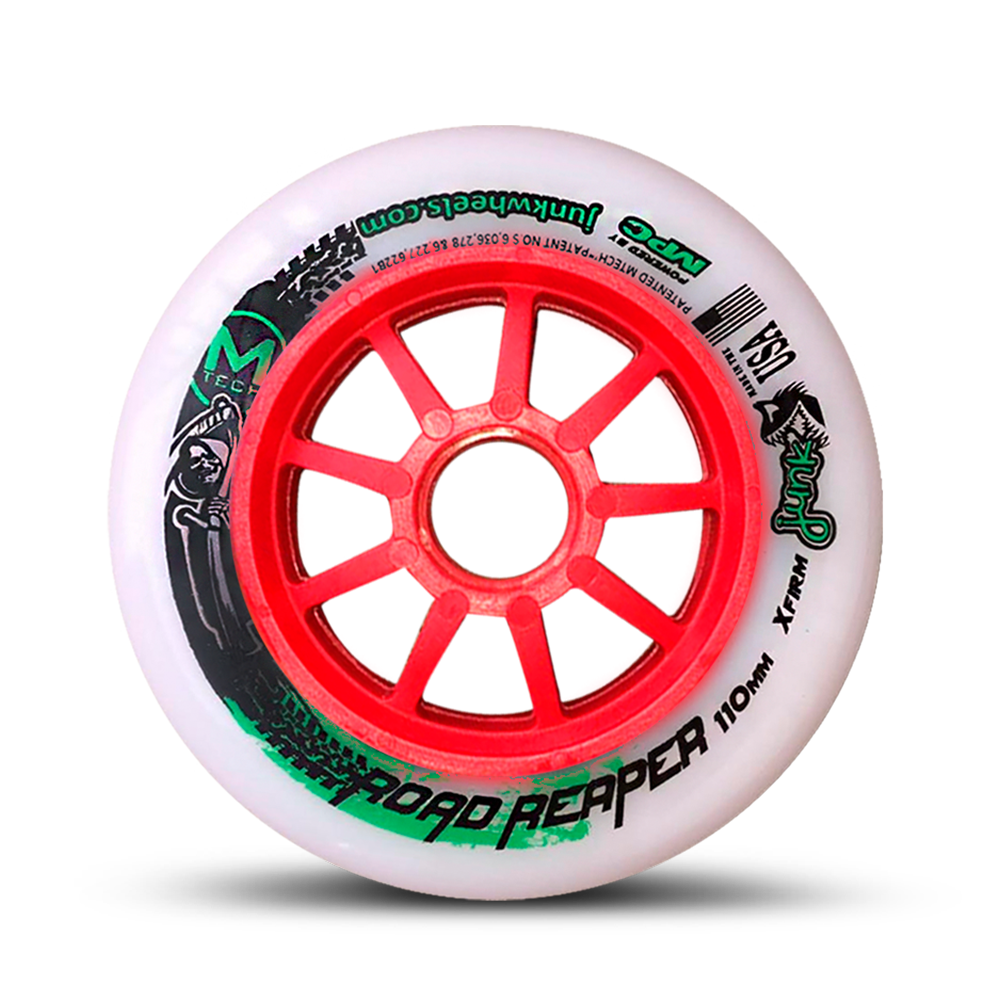
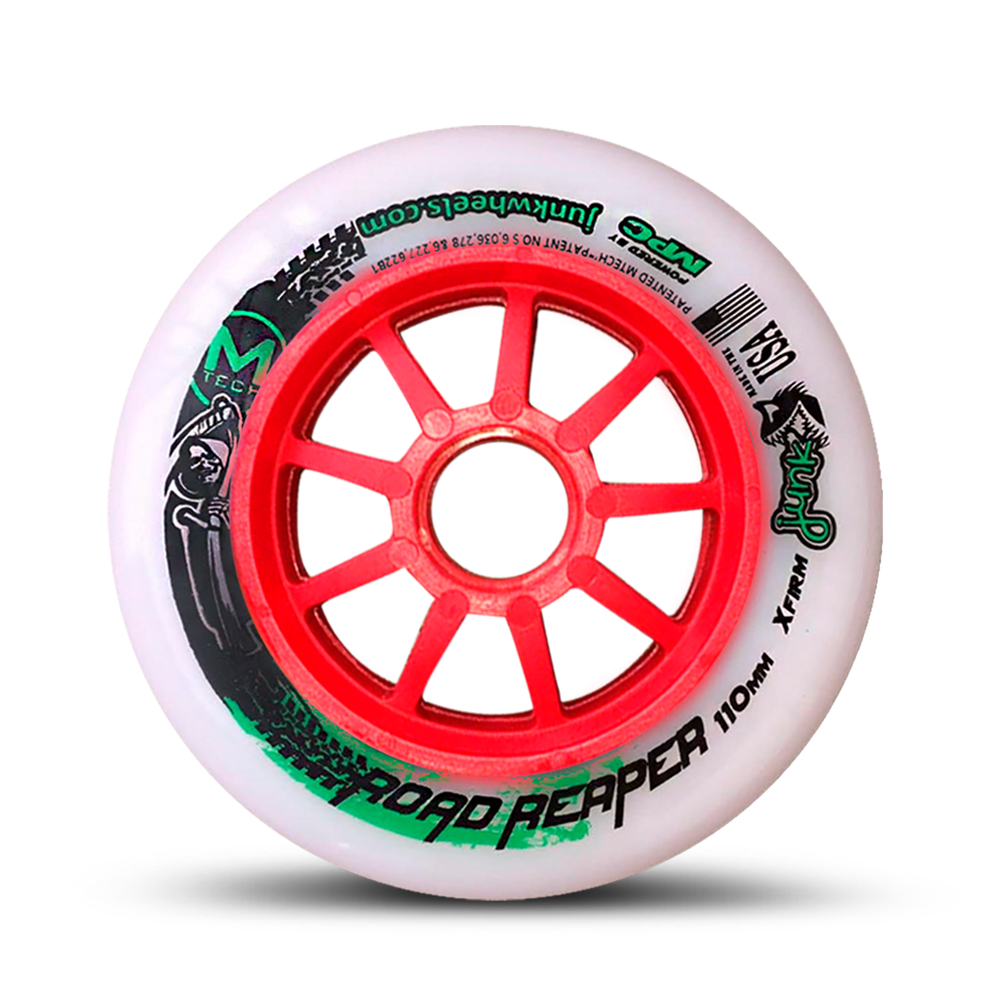
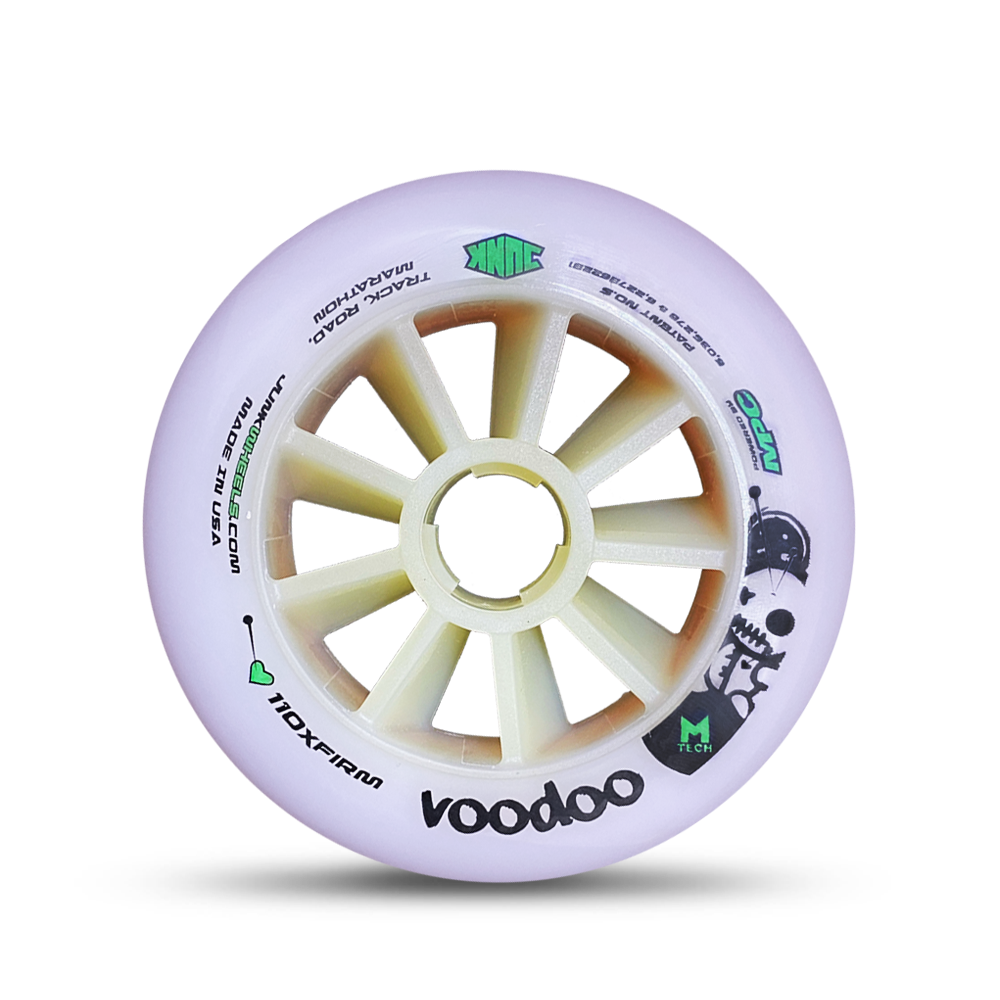
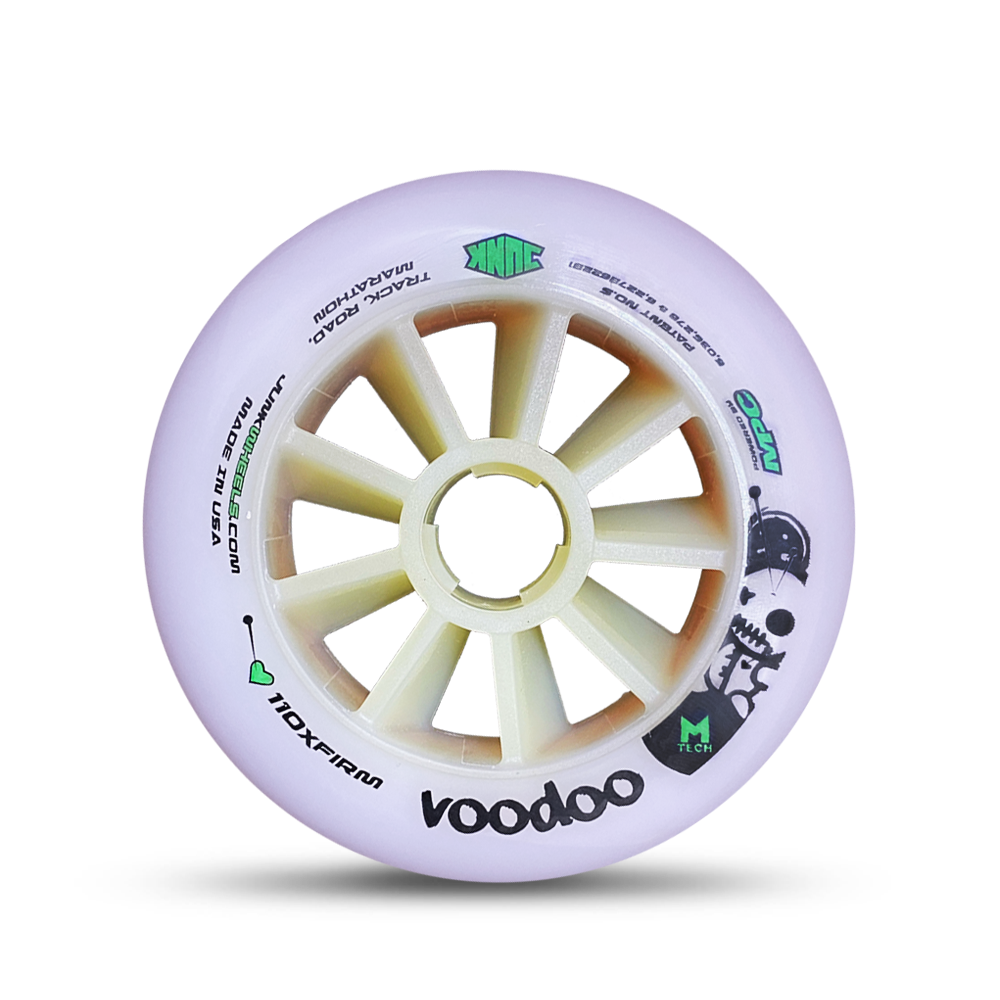
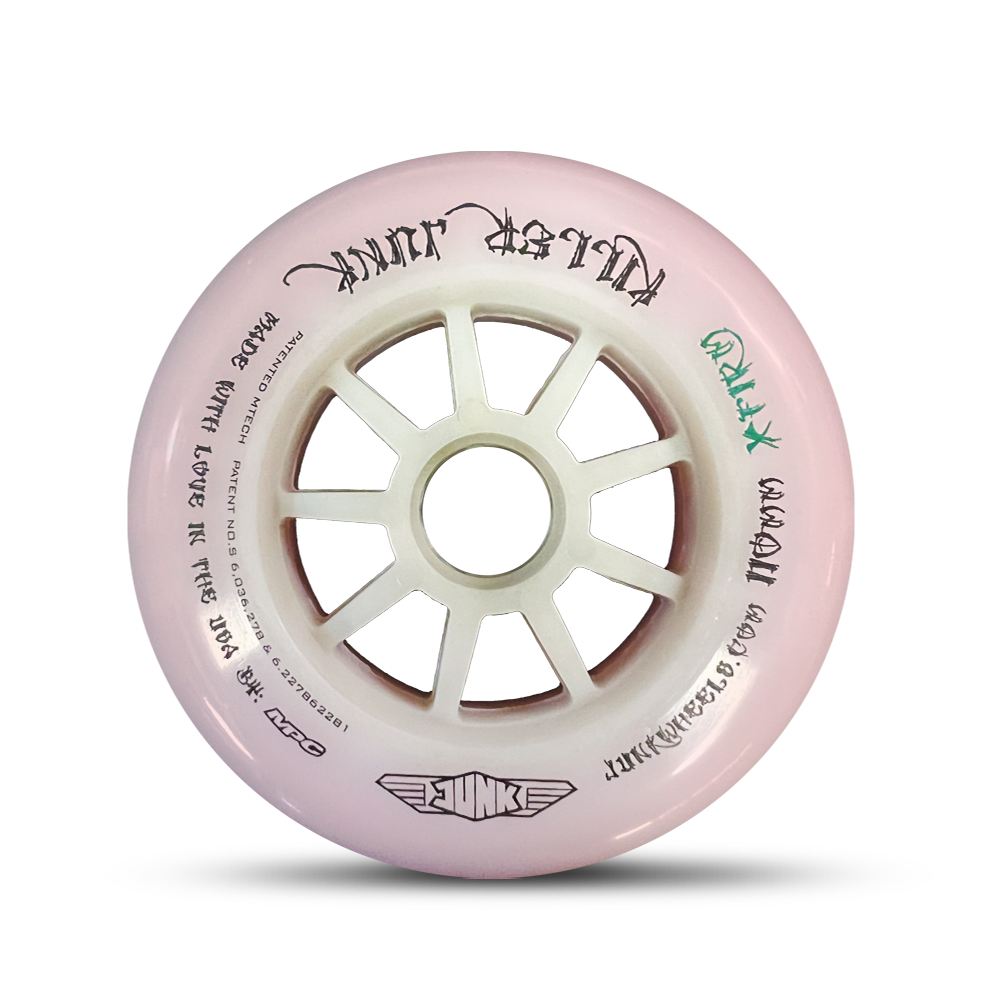
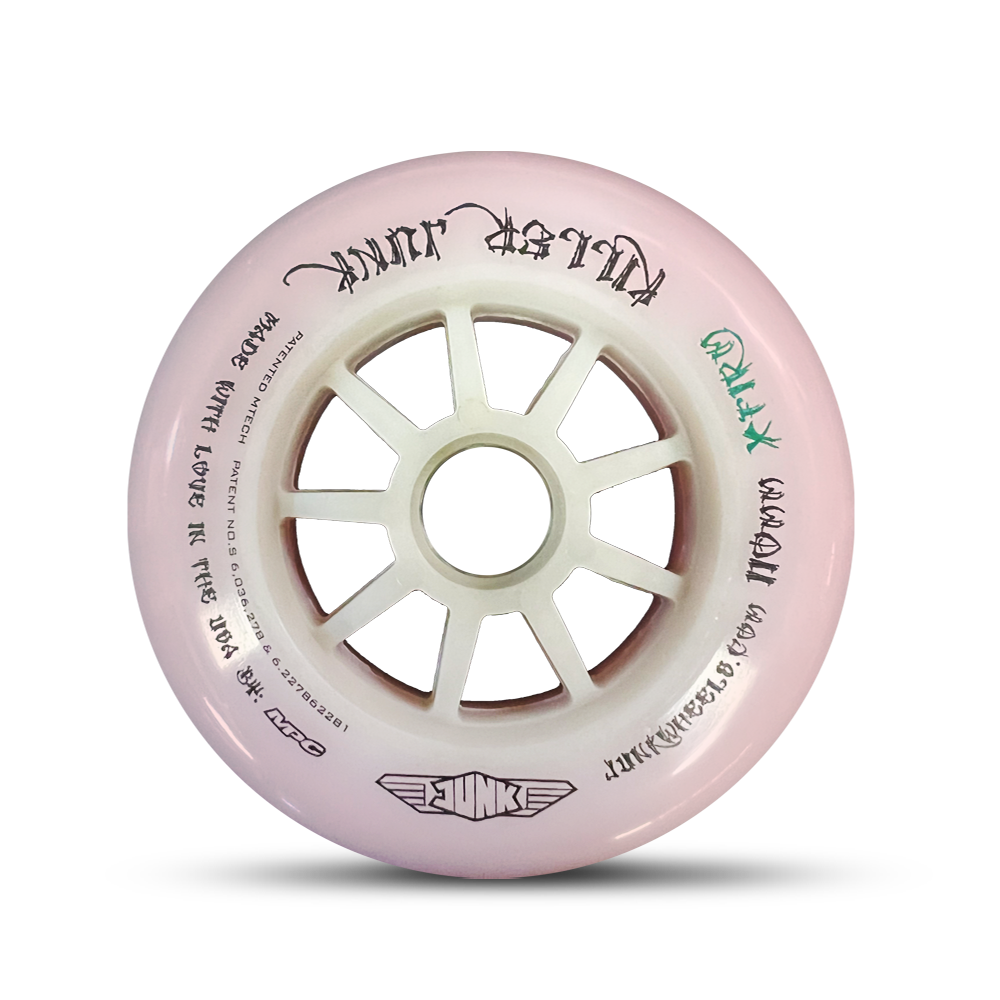
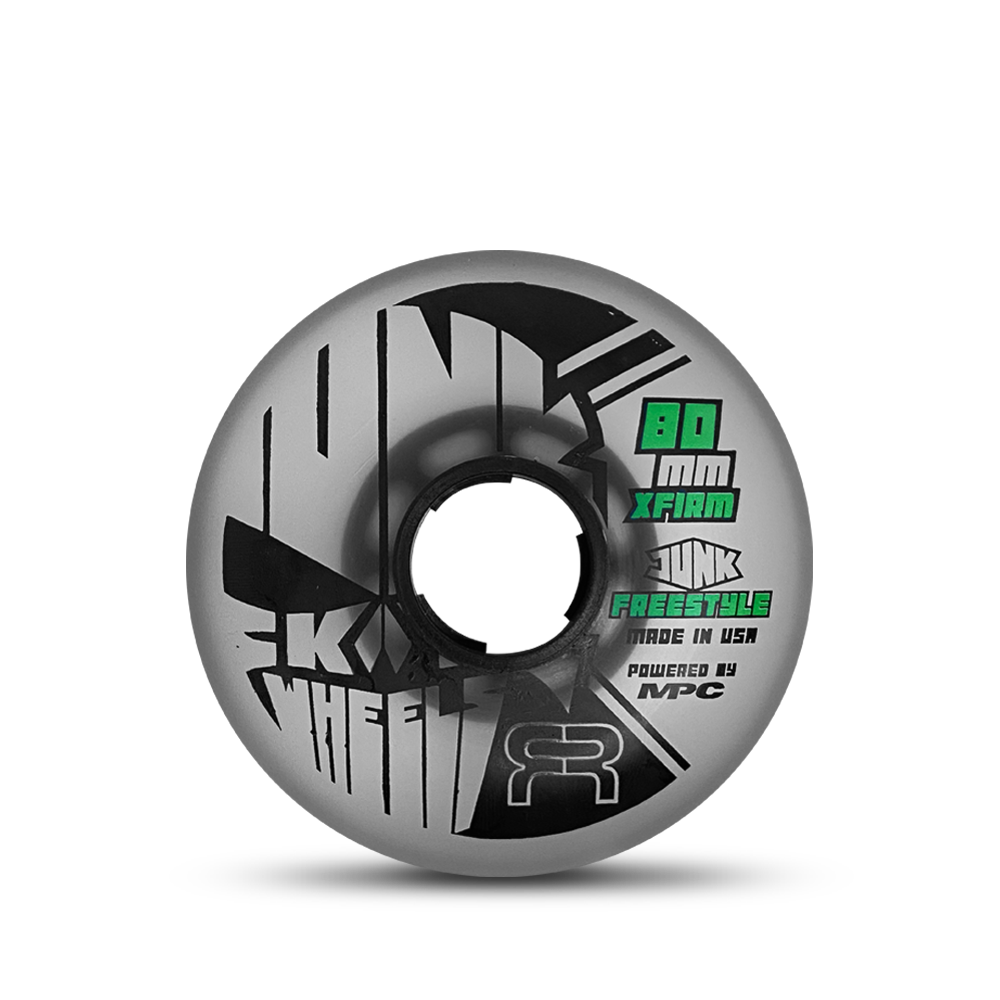
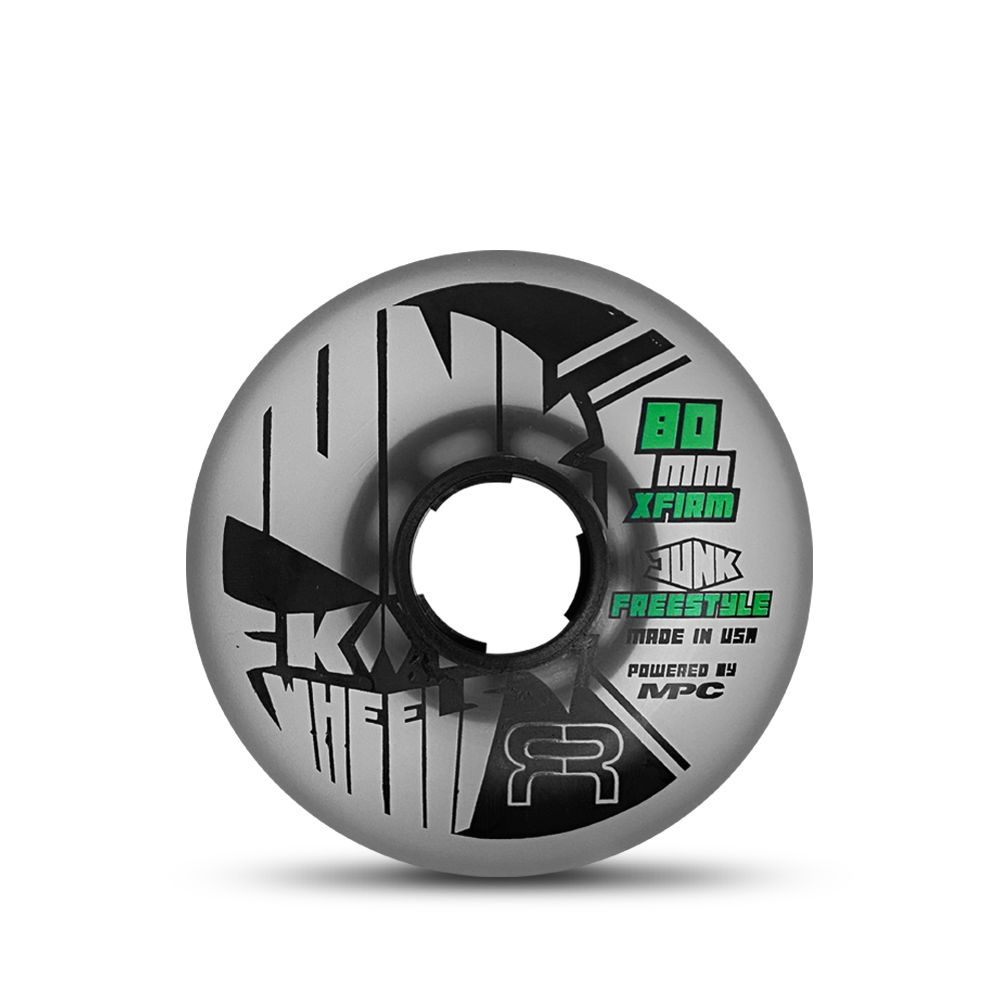





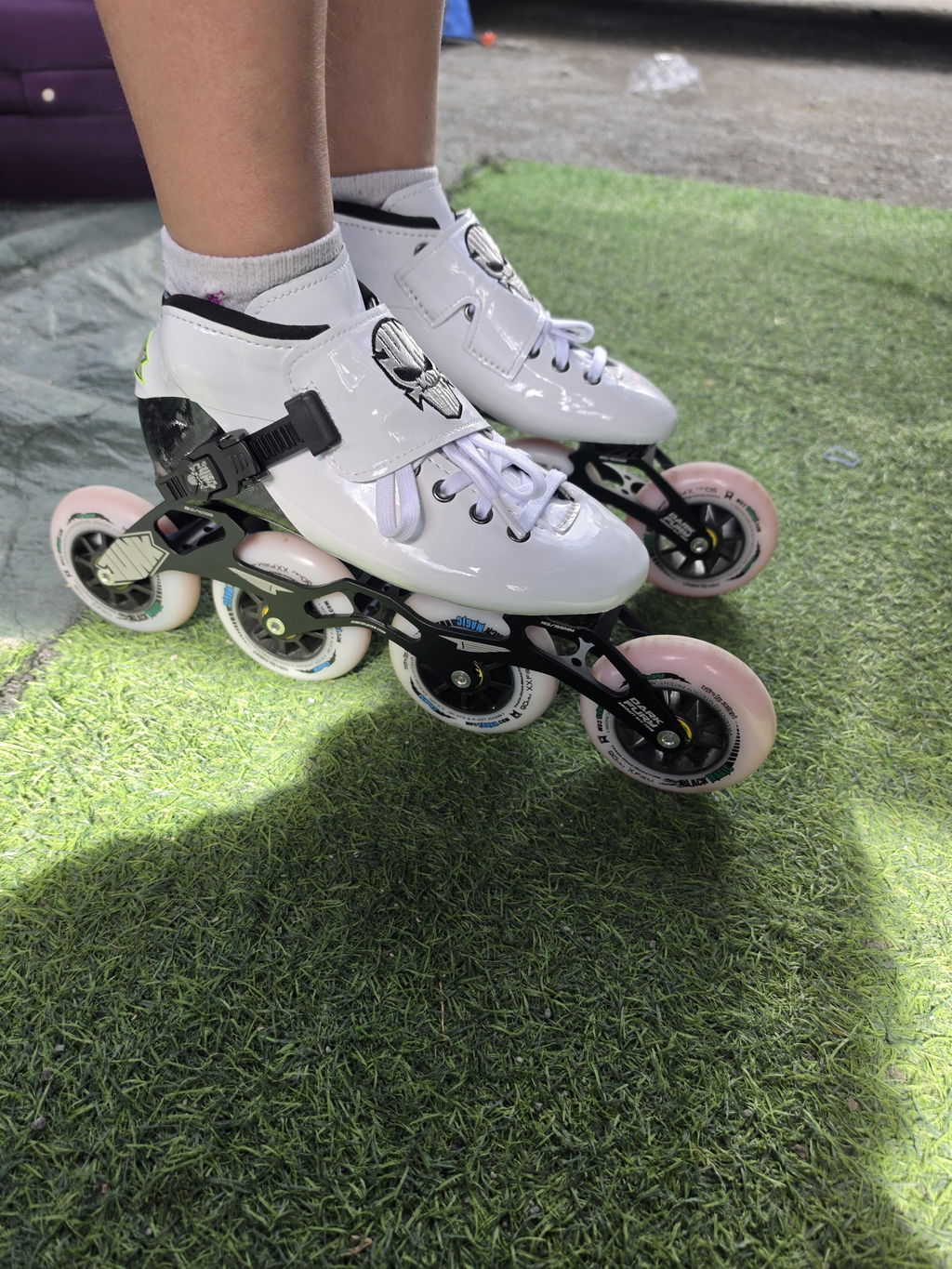
Wheels are fantastic. Grip and roll really make a difference over other dual density wheels that I use for training. Used them for the NSIM and still look brand new
Bearings
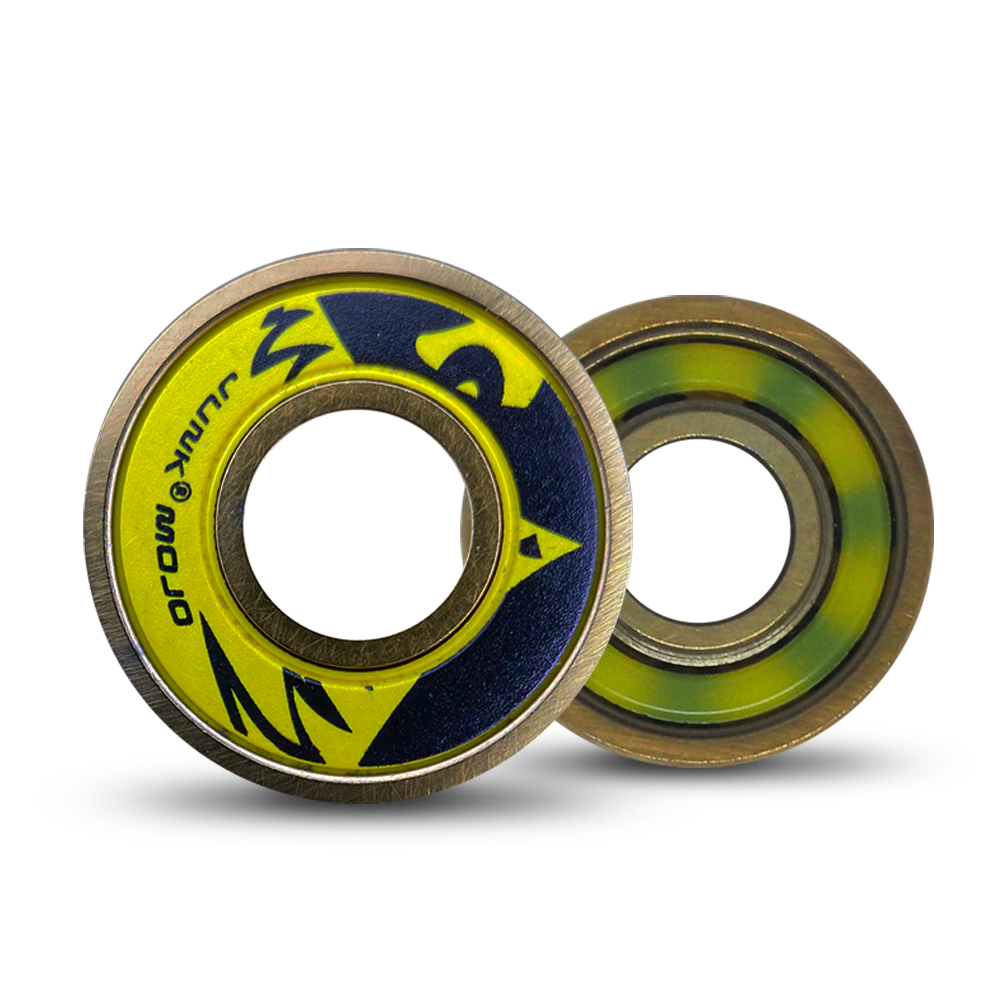
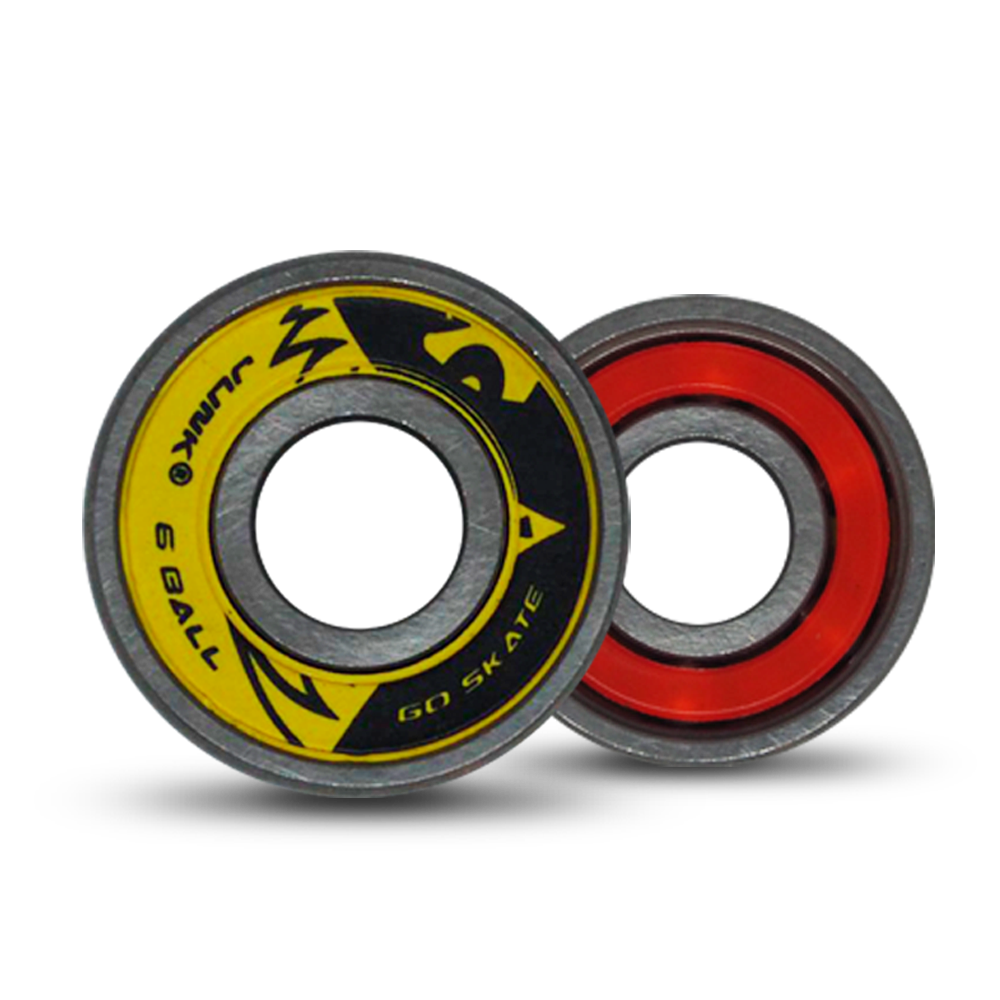
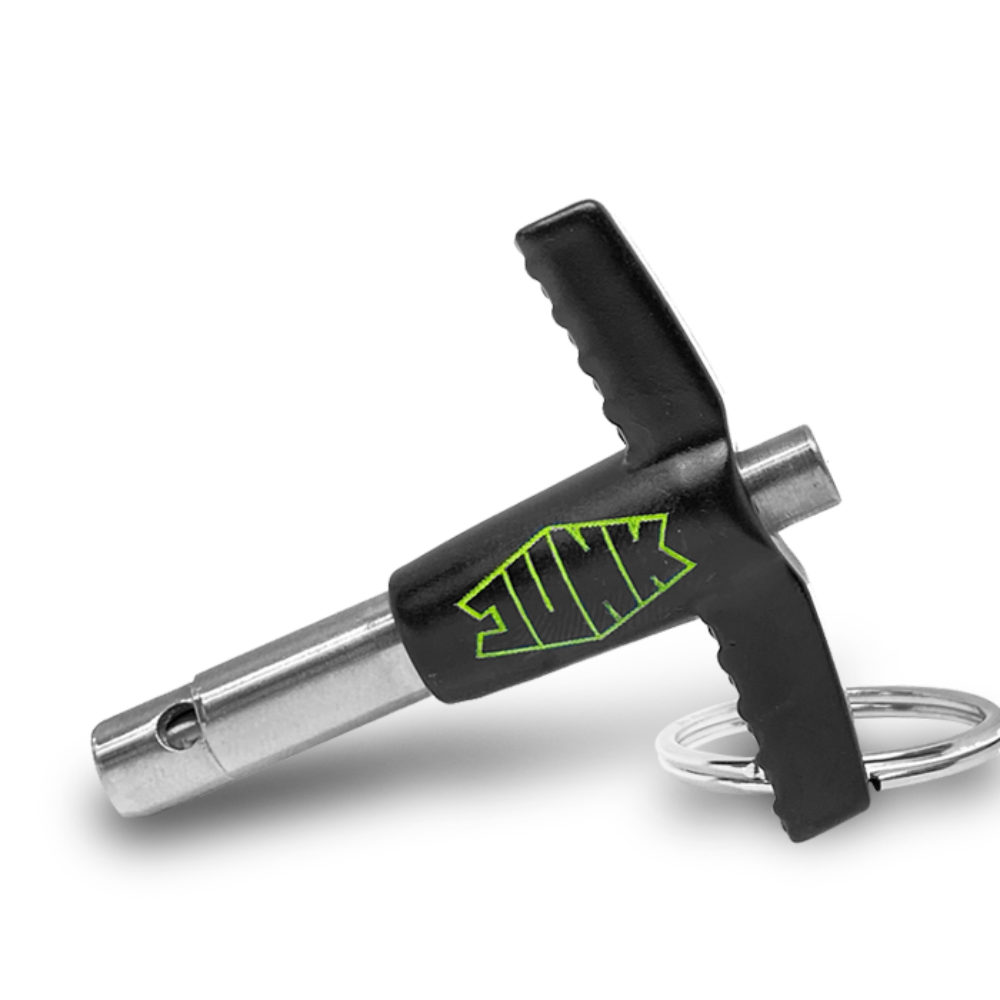

Junk Frames
The Junk Story
THE JUNK STORY
Born in New York. Forged in Medellín. Made with love in the USA.
Medellín
Before Junk was a brand, before a single wheel existed, it was just me as a kid skating.
I grew up in Medellín, Colombia. In my house, my quad skate wheels were everywhere, driving my mother insane. To her, they were just garbage, pure junk. To me, they were my most prized possessions.
She used to tell me, “If you don’t clean your junk, I’m throwing it out.”
That memory stayed with me and went on to shape my brand.
New York
When I was 17, in May 1995, I moved to New York to join my mother, who had been living there for a couple of years.
At that time, inline skating in Central Park was huge. Not just speed skating. I remember cones lined up in front of Tavern on the Green for a big group of slalom skaters. They would bring boom boxes, which were new to me, and skate around the cones down the West Side drive.
I also remember meeting other speed skaters who would gather at the skater’s curb, located by the 67th Street and Central Park West entrance to the park.
There were skaters everywhere. Music, energy, people moving together. It felt alive in a way I had never experienced before. In New York, skating wasn’t just about racing, it was a lifestyle.
I was still the same kid from Medellín, but something shifted. Being in New York opened my eyes to what was possible. The pace, the mindset, the way people approached life and work, it stayed with me.
I embraced New York and the United States completely. I didn’t want to change it. I wanted to be part of it.
Medellín made me a skater. New York pushed me to think bigger.
The Name “Junk”
Years later, after moving on from owning a roller rink in Hackettstown, New Jersey, my friend Kevin Redmond, who owned MPC at the time, asked me to help him make sense of the company’s wheel business. It was struggling, and it was pulling the entire urethane company toward bankruptcy.
Our arrangement was unorthodox. I stepped in at full risk. I wasn’t paid anything. The deal was simple: if we succeeded, I would become the worldwide distributor and build my own brand alongside MPC.
At that point, after the roller rink, I didn’t have much room to fail. But I believed in my friend’s company, I believed in their urethane, and I believed I could build MPC into the number one wheel urethane brand in the world, with Junk alongside it.
The stakes were high. If we didn’t succeed, MPC would likely be gone, and I would be right there with it.
So while I was working to rebuild MPC, I also started building my own idea.
And there was never a doubt in my mind what I wanted to call it.
Junk Wheels.
I had carried that word with me since I was a kid. What my mom called junk, I saw as my treasure. That idea never left me.
When I started telling people my idea for a brand name, no one liked it.
People told me it didn’t make sense. That no one would take it seriously. That it sounded like garbage. They weren’t wrong. It does.
The closest thing I got to support was from my friend, Taiwanese coach Chin-Lung Huang. He asked me why I would choose a name like that.
I told him the story.
He understood it. He really did. He seemed to love the story behind the name. I could see it in his face. For a second, I thought, finally, someone likes my idea.
But even then, he told me it wasn’t a good idea. That the name would be hard for people to accept.
I went with the name Junk anyway.
I believed in it.
MPC and Purpose
Walking into MPC changed everything for me.
It wasn’t just a factory. I felt like a little kid, like Willy Wonka and the Chocolate Factory. This was a place where dreams were made. But it was also a place where a group of people depended on those doors staying open. At the time, the company was struggling, and it was clear that if things didn’t turn around, it wouldn’t survive.
I wasn’t there for a paycheck. I had taken on the risk. I had more skin in the game than anyone knew. It was succeed or perish. I knew exactly what was on the line.
At that point, I was working full time to rebuild MPC, but I wasn’t earning anything. By then, I had already gone over two years without a steady income, and it would still be a couple more before I did.
MPC had lost so much money on wheels that everyone was cautious and afraid of them. It was obvious in our meetings that the wheel department was viewed as the ugly stepchild. The message in leadership meetings was clear: work on wheels, but don’t let them drag us down again.
I was inside the company, but for most of my first three years there, I felt like an outsider. My ideas were things people thought made sense, but also things they were afraid of. Everything had to be questioned. Everything had to be proven.
Any profit that came in, I put right back into building the brand. Sponsorships, supporting skaters, growing the presence. I believed that was the only way forward.
I was also careful about asking for anything. I knew how close things had gotten to bankruptcy. The last thing I wanted was to push the company back toward shutting down the wheel division.
So I kept everything as lean as possible. But it wasn’t easy.
By the end of 2015, I was struggling to make ends meet.
At the same time, I was learning everything I could about urethane, how wheels were made, and what made them perform. I worked closely with Kevin, with Jamie, our chemist, and with Coach Huang. We were constantly testing, adjusting, and trying to make something better.
The first major project I led at MPC, while in charge of the wheel department, was the Black Magic wheel.
It was a turning point.
Black Magic took off and became one of the most trusted wheels in the world. At its debut at the 2013 World Championships in Belgium, Andrés Muñoz from Colombia skated a flawless 300 meter time trial, winning gold, breaking the world record, and becoming the first skater in history to break the 24 second barrier.
A legend was born.
It showed that we could build something that worked at the highest level again.
At the same time, I was quietly working on my own wheels. But to launch a wheel with a name like Junk, everything had to be right. We tested the first samples with Yu Ting Huang, Coach Huang’s daughter, who went on to win the 1000 meter race at the World Games in Cali, Colombia, in August 2013, in a stacked field.
Junk wasn’t something separate from MPC. It was being built inside it, alongside everything we were doing to keep the company alive.
That’s where Junk really started.
What Junk Means
Junk Wheels started as a memory of my mom being tired of seeing my wheels all over the house. To her, it was just junk. To me, it was everything. That idea never changed.
Over time, Junk became more than just a name. It became a way of looking at things. Something people overlook, something people doubt, something they don’t take seriously, but something that can still become something great.
That’s what Junk represents.
It represents the people behind it. The ones pouring the wheels. The ones skating them. The ones pushing themselves every day to get better.
It represents taking a risk when there are no guarantees. Believing in something when it doesn’t make sense to anyone else.
Nothing about this was supposed to work. None of it really made sense. But it worked because it was real.
Junk was built with purpose. It was built with risk. It was built by people who cared.
And it has always been made by hand 🖐️ with love ♥️ in the United States 🇺🇸
— Francisco Ramírez
Founder, Junk Wheels